1.820.3345.33 Contact@TravelTourWP.com

Login

Sign Up

User registration is currently not allowed.

Login

Sign Up

User registration is currently not allowed.
1.820.3345.33 Contact@TravelTourWP.com

Login

Sign Up

User registration is currently not allowed.

Category

Historical Analysis

Semarkar (赛玛噶), the Daughter of Namri Songtsen, was a pivotal figure in the political landscape of 7th-century Tibet. Active between 633 and 650 AD, her marriage and intelligence-gathering efforts significantly influenced the relationship between the Tibetan Empire and the Kingdom of Zhangzhung. 1. Early Tibetan-Zhangzhung Marital Alliances According to ancient Tibetan manuscripts discovered in Dunhuang,...
Read More
The armed conflict between Chinese and Tibetan forces erupted once again along the de facto Sino-Tibetan border established in 1912, as tensions escalated in the Riwoche (Leiwuch’i) region, located 40 miles from Chamdo. Although skirmishes had never fully ceased, this crisis marked a significant flare-up. Situated along the Dza Chu (Sze Chu) River—a tributary of...
Read More
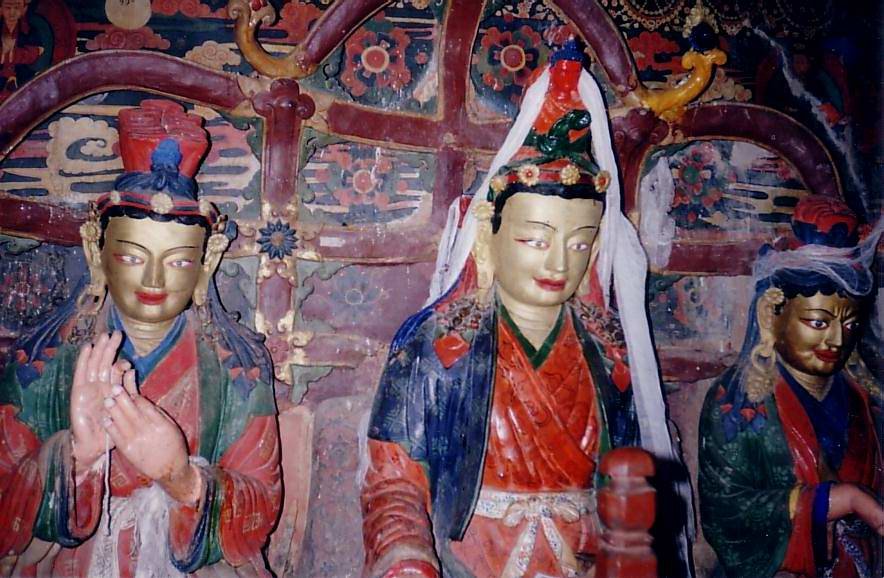
The Unique Style of Tibetan Buddhist Sculpture Tibetan Buddhist sculpture has evolved over centuries by absorbing and blending artistic influences from India, Nepal, Kashmir, and China. This fusion has resulted in a distinct sculptural tradition with diverse forms, intricate craftsmanship, and unique regional characteristics. These sculptures vividly depict the evolution of Tibetan Buddhism, reflecting its...
Read More
Introduction to Tibetan Unification and Division Before the significant political shifts in 1642, Tibet was characterized by a complex milieu of internal conflicts and divisions that had persisted for approximately 288 years. The fragmentation of Tibetan society can be traced back to the 7th century, marked by the fall of the Tibetan Empire, which had...
Read More