Historical Background of Tibetan Papermaking
The craft of papermaking in Tibet has a storied history that dates back to the 7th century. This ancient practice was introduced to the region when Princess Wencheng, a Chinese royal, married King Songtsen Gampo and brought with her the Papermaking technology from the Tang Dynasty. This moment marked a significant cultural exchange, as Tibetan artisans began to adapt these methods using local resources and materials, leading to the evolution of a unique papermaking tradition reflective of Tibetan culture.
Initially, the methods and materials used for papermaking were rudimentary. Artisans employed the bark of trees, primarily from the Daphne genus, which is native to the region, enabling them to create a paper that was both durable and suited to the local climatic conditions. They meticulously processed these materials through methods that involved soaking, pounding, and pressing. Through experimentation and ingenuity, Tibetan craftsmen refined their techniques, producing paper that not only met the practical needs of the community but also became integral to cultural practices.
Tibetan paper took on a significant role, particularly in the preservation of religious texts and Buddhist scriptures. Its importance is evident in venerable institutions such as the Jokhang Temple and the Potala Palace, where this paper was used to create scrolls and scripture texts that hold extraordinary spiritual significance. The use of Tibetan paper for such crucial documents underscores its role as a vessel for cultural and religious expression. As a result, the ancestry of Tibetan papermaking is not merely a craft but a reflection of the very identity of the Tibetan people, intertwining their historical narratives with the sacred tradition of Buddhism.
Materials Used in Tibetan Papermaking
The craft of Tibetan papermaking is deeply rooted in the utilization of local plants, which serve as the primary raw materials, contributing significantly to the unique qualities of the paper produced. One primary plant used in this traditional process is Stellera chamaejasme, a flowering plant native to the Tibetan plateau. The fibers extracted from this plant are particularly noted for their strength and flexibility, making them ideal for creating durable sheets of paper. Moreover, the presence of natural antiseptic properties in these fibers ensures that the paper remains resistant to degradation caused by microbial activity.
Another prominent plant involved in Tibetan papermaking is Cornus controversa. The bark and stems of this plant are harvested and processed to extract long, fibrous strands. These strands not only enhance the tensile strength of the paper but also contribute to its inherent moisture resistance, making it suitable for various climatic conditions. Additionally, the use of diverse species of Daphne adds to the structural integrity and aesthetic appeal of the paper, creating a unique texture that is highly valued in Tibetan culture.
In addition to these primary materials, various additives play an essential role in refining the papermaking process. Radix angelicae is often used due to its natural adhesive properties, which help bind the fibers together more effectively. Yak-hide glue further enhances the cohesion of the paper fibers, providing additional strength and durability. Wheat paste is also commonly incorporated as an additive to improve the overall finish and pliability of the final product. By carefully selecting and combining these natural materials and additives, Tibetan artisans create paper that is not only functional but also reflective of their rich cultural heritage.
The Papermaking Process
The traditional Tibetan papermaking process is a meticulous craft that embodies centuries of knowledge and techniques passed down through generations. It begins with the collection of natural fibers, predominantly derived from the Daphne plant, which is abundant in the Tibetan plateau. Artisans harvest these fibers during specific seasons to ensure optimal quality and strength in the final product. Following the collection, the fibers undergo a thorough washing process to eliminate impurities and to soften them for easier manipulation.
Once the fibers are prepared, artisans proceed to a crucial step involving cooking. The fibers are boiled in water, sometimes with the addition of natural substances like ash, to further break them down and enhance their qualities. After cooking, the fibers are rinsed again and then beaten with tools made from heavy wooden sticks. This beating process, known as “pounding,” helps to separate the fibers and create a fibrous slurry, which is essential for sheet formation.
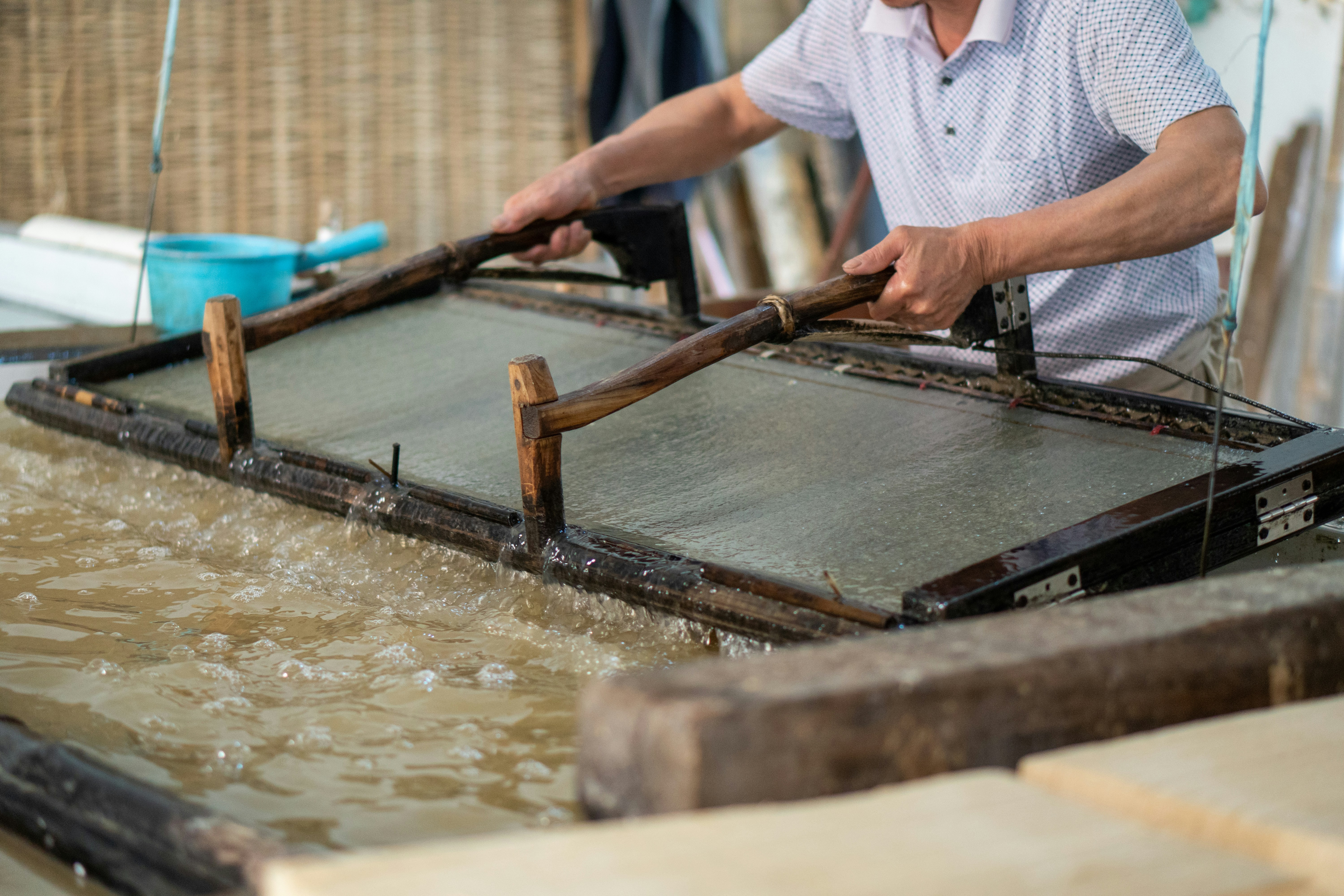
The next phase involves constructing wooden frames known as “chung,” which are pivotal in shaping the paper. These frames are often hand-carved and designed to fit specific sheet sizes. Artisans then pour the prepared slurry onto the frame, allowing for an even distribution that forms the sheets. The excess water is carefully drained, ensuring that the paper retains its unique texture and fibers.
After the sheets are formed, they must be dried properly. Tibetan artisans utilize the natural environment to air-dry the sheets, typically hanging them under sunlight from bamboo poles. This drying method not only removes excess moisture but also infuses the paper with the distinct qualities attributed to the Tibetan plateau, such as durability and a slight resilience against the elements. Finally, the papers undergo polishing—often with a smooth stone—to enhance their aesthetic appeal and usability for cultural artifacts.
This intricate papermaking process not only highlights the technical skills of Tibetan artisans but also exemplifies the cultural significance embedded in each sheet of paper they create.
Cultural Impact and Significance of Tibetan Paper
Tibetan papermaking is not merely a craft; it embodies centuries of cultural and religious significance that permeates through Tibetan society. Traditionally, Tibetan paper is crafted from the bark of the daphne plant, a process that dates back to ancient times. This unique material is significant for its use in producing Buddhist texts, ritual scrolls, and art. The preservation of these spiritual documents is vital for maintaining the Buddhist teaching and philosophy, underscoring the integral role that Tibetan paper plays in spiritual expression.
The historical context of Tibetan papermaking reveals its deep-rooted connection to Tibetan Buddhism. The paper produced is often used to create texts and scriptures that serve as resources for monks and practitioners. Such texts not only foster spiritual growth among the Tibetan population but also ensure that the teachings of Buddhism are preserved for future generations. Thus, Tibetan paper can be seen as a vessel of cultural heritage and spiritual continuity, bridging the past with the present.
Moreover, the influence of Tibetan papermaking extends beyond its borders, impacting the papermaking traditions in neighboring regions such as Bhutan and Nepal. These places have adopted and adapted methods of making paper that reflect the teachings and artistic qualities synonymous with Tibetan practices. This diffusion of papermaking techniques illustrates the interconnectedness of these cultures and highlights Tibetan paper as a significant influence on the broader Himalayan context.
In recent years, the importance of Tibetan papermaking has been recognized by scholars and cultural enthusiasts, leading to its designation as a national intangible cultural heritage. This acknowledgment emphasizes the ongoing relevance and importance of this traditional craft, ensuring that Tibetan papermaking continues to be celebrated not only as a historical practice but also as a living aspect of Tibetan culture, with implications that reverberate far beyond the region itself.
Leave a Reply